The communication class is aimed at assisting students with basic daily English conversation and Helping them to improve their speaking and writing skillss for daily needs.
The following are essays written by students for the Communication Class on topics of their own choosing.
Why I don’t write my essay….
By Anastasiya Kovalska

There is a task. There is a deadline. And, what’s nice, there is no punishment for not completing it. Maybe that’s why I keep postponing writing this essay until the last day. It doesn’t even bother me that from lesson to lesson I promise myself and others that I will write it eventually. The usual factor of awkwardness from school—a kind of “stick” that motivated me—is gone, and now it’s harder to organize myself.
Sometimes, between classes, I feel anxious, but I realize it’s not based on anything. It’s just a reflex developed by the school system.
While studying at OLive, I first understood that learning can be interesting and enjoyable, not just an obligation. I noticed that studying becomes easier and more effective when there is freedom to meet basic needs: I can leave the classroom calmly without explaining why, and I don’t have to worry about grades or comparing myself to others. After all, the only important comparison is comparing myself to my past self.
Right now, I’m on my way to class. On the tram, I realize that this pattern of behavior shows up not only in my studies but also in my daily life. I often don’t finish tasks if there’s no external control or noticeable consequences. I guess I tend to procrastinate.
I also realized that I don’t exercise regularly for the same reason. I need my husband to control my workouts more strictly and not allow me to skip training sessions.
I’m glad about this trip and that I discovered and finally acknowledged this behavior pattern in myself. I will definitely work on this with my psychologist.
And now, I’m approaching the university and I’m relieved that I’ve written this essay.
This essay became not just a completed task for me, but a step towards self-awareness. I realized that I need to handle tasks not out of fear of punishment, but from an inner desire to grow. Understanding my habits is the first step to changing them, and today I took another step forward.
P.S. While I was thinking about this, I accidentally passed my stop. It seems like this is also part of my path to change.
The Charm of Budapest’s Architecture: Through the Eyes of an Odesa Native
By Valentyna Hienova
When I moved to Budapest, I never imagined that this city could touch me so deeply. I’m from Odesa, and it seemed that no other city could rival its beauty and spirit. But as I wandered through the streets of Budapest, I began to notice something familiar, somthing that reminded me of home.

Budapest and Odesa—two cities that seem to speak the same language, the language of architecture. Here, as at home, every street, every building holds a story. Majestic neo-Gothic structures rise above the Danube, as if quietly conversing with the sea, much like the historic facades of Odesa gaze out over the waves of the Black Sea.
There is something remarkable about these cities, intertwining various cultures and peoples. In Budapest, this is evident in every building: Turkish baths stand alongside grand palaces, and the embankment is adorned with Art Nouveau structures. In Odesa, every corner is steeped in a multicultural past—Italian courtyards, French boulevards, Greek streets. It feels as though both cities carry the spirit of travel, discovery, and encounters.
But perhaps the most important thing that connects Budapest and Odesa in my heart is their coziness. These cities don’t just impress with their beauty; they offer a sense of home. Walking along the cobblestone streets of Budapest, I feel the same calmness as I do on the avenues of Odesa. Here too, you can stop at a small café, order a cup of coffee, and watch life flow by at a leisurely pace.
Budapest has become a second home for me, but it doesn’t distance me from Odesa; on the contrary, it brings me closer. Its architecture reminds me that home is not just a place, it’s a feeling. A feeling that you are exactly where you are meant to be. And every time I pass by the majestic buildings of Budapest, I see a reflection of Odesa, and it warms my soul.

Transformation
By Svitlana Dzialovska
Can a person truly change? Before I came to believe in the Lord Christ, I never even thought about it—and even more so, I never believed it was truly possible. Over time, as I looked more and more at Christ’s example, I noticed changes within myself. Changes in things that once felt unnatural and not truly mine. And now, I even see changes in areas I had never noticed before—things that were sometimes invisible to me and even to others.
The word “transformation” comes from Ancient Greek μεταμόρφωσις (metamórphōsis), from μετά (metá, “change”) + μορφή (morphḗ, “form”) and means “change” or “transformation.” When I think about this topic, I always picture a caterpillar becoming a beautiful butterfly; or a yellow dandelion that, almost overnight, turns into a fluffy puffball; or the story of the ugly duckling transforming into a magnificent swan.
What unites all these examples is transformation.
So, how does a person undergo transformation? It’s a process of changing one’s mindset. I’d like to share a powerful quote from motivational speaker Stephen Covey: “Plant a thought, reap an action; plant an action, reap a habit; plant a habit, reap a character; plant a character, reap a destiny.” This shows us that personal transformation often stems from a change in character. Yes, it turns out, this is possible.
But what is required to achieve this? First, to recognize our own imperfection. Then, to want and be ready for change.
Whew! It sounds simple, but in practice, it’s a process. And sometimes, it can be long, painful, and with slow results. It all depends on the individual.
As I was writing this, the idea occurred to me to explore the process of a caterpillar transforming into a butterfly. I decided to do some research and, of course, turned to Wikipedia. There, I found lots of information, but one statement caught my attention and stuck with me: “The duration of the pupa stage varies from 6–10 days for some species of flies too many months (if the pupa enters diapause).”
This means that the transformation of one’s mindset isn’t something that happens instantly. It requires time. Sometimes, it may even seem like no change is happening at all. But deep inside, an invisible process of transformation is underway, and it can take a long time. It’s important to be patient and persevere. Then, at the right moment, the culmination of those changes will emerge. Just as a caterpillar, which at first glance seems incapable of becoming a butterfly, transforms into something miraculous—a stunning butterfly. And what happens if we “help” the pupa emerges prematurely, even with good intentions? This intervention can lead to the pupa’s demise. So, it’s crucial to be present, yet not cause harm.
What else is important during a time of change? Taking personal responsibility to make the efforts necessary to transform one’s character.
In conclusion, from my personal experience, I want to say this: “If you want to change the world, start with yourself.”
At times, we all feel the desire to change the world—or someone else. In such moments, it’s worth trying to work on ourselves first, and then help others. This thought is rooted in a well-known parable from Jesus Christ: “…first take the plank out of your own eye, and then you will see clearly to remove the speck from your brother’s eye.” (Matthew 7:5)
Even better, realize that when we set out on the path of change, it won’t go unnoticed. Take, for example, the beautiful butterfly: its transformation always captures attention—with its wingspan, its colors, and other outwardly visible traits. Likewise, our character, after deep inner transformation, will not remain without visible external changes and can serve as an example, inspiring others to change their own lives.
When Destiny Dances Salsa
By Lolia Tskhovrebova

Dance has always been a part of my life. As a child, I was involved in various dance classes and competitions. In adulthood, life led me to salsa. I never imagined that this hobby would have such a significant impact on my life and that I would meet my husband there.
How I discovered salsa back in 2009 is a story in itself. Without diving too deeply into the details, my friend and I were vacationing in Odessa when, by a stroke of luck, we met an artist on the beach who invited us to a wonderful club called Bernardazzi (In the building of the Odessa State Philharmonic). There, we were mesmerized as we watched people having fun dancing salsa. When we arrived in Odessa, we hadn’t even considered that we’d leave with a mission to join this amazing salsa community. Especially since, back in 2009, salsa wasn’t as popular as it is now. We returned home full of determination to learn how to dance so that we could attend all the salsa parties.
Over time, by 2014, I was traveling with a show group to various competitions and parties across Ukraine and even to a couple of European cities.
What made 2014 particularly special? Oh yes, this is the story of how I met my husband. I’ve always loved watching romantic stories where people meet by sheer chance. But I never thought I’d be one of those people myself.
At one of the salsa parties, during a song, I was walking across the dance floor. My trainer was dancing with one of the beginners, and suddenly she was called away for something urgent. Normally, it’s considered impolite to leave a dance midway, as it’s best to finish the song out of respect for your partner. But she had to go, and as I was passing by, she grabbed me and, quite literally, handed me over to my future husband, saying: “Zhenya, this is Lolia—she’ll teach you everything.”
And what could I do? I smiled and finished the rest of the rather boring basic steps for half of the song. The dance itself wasn’t exciting, but the impression from that meeting has stayed with me. I remember his gaze, his smile, and what struck me the most—he could barely dance, but he was trying so hard to make an impression and finish the dance.
For context, in salsa, the man leads, not the woman. If a woman doesn’t know how to dance, she just needs to know the basics to follow her partner. But the man is responsible for the beauty and flow of the dance.
This is how the story of our love began – with a dance. Salsa is still a part of our lives today, maybe not as much as it used to be 24/7, but whenever we hear salsa music somewhere, our feet lead us to the dance floor.
Feeling of guilt
By Olena Kulikova
We are responsible for those we tame!
These are words from “The Little Prince” by Antoine de Saint-Exupéry. And they suggest that people need to take a responsible approach to getting an animal at home and taking care of it for the rest of its life.
When I was a kid, we had pets in our house periodically. Mostly cats. But they were brought by my parents, my brother. So I probably didn’t feel a strong sense of direct responsibility for them. I love animals, cats especially. Perhaps because with them you don’t have to get up early in the morning and take them for a walk. Or perhaps because they seem to me gentle and more contactable.

When I was 28 years old, I was already living in a separate apartment from my parents with my future husband in Kharkov. We were renovating the apartment, not all the rooms were completely ready, but we decided to get a kitten. Although the size of the five-month-old cat at that time made it seem like an adult cat. His name is Beryl. That was his name on his passport and we did not change his name. The Maine Coon breed. The largest breed of cat.
Like I said, I’ve had many cats throughout my life. Different breeds, no breeds. But this particular breed has a very close relationship with people. It’s a big and gentle ball of fur that will follow you around all the time, just because it needs company. He may not even touch you, he may just come and sit next to you. But his favorite thing to do is to lie on your face and head, which makes it hard to breathe. I think that’s how he thinks he can express his feelings as much as possible. Hugging like a human being.
At that time, we did not have a child yet. But Beryl was a great test for having children in every sense. I say that because I can compare what it is like to have and care for a kitten and then a young son when he was born. I felt a very similar sense of responsibility. Of course, it would be wrong to compare, but I just want to show that when I got a cat I was worried about its diseases, vaccinations, etc.—as much as deeply. But when the war started in Ukraine and we were traveling to Hungary, we couldn’t take him with us. We were traveling in one car with a child, with a lot of things, not knowing where we were going to live. And in Ukraine, he stayed with my parents in a place that was familiar to him, in conditions that were comfortable for him.
Cats are not dogs who choose one master in their entire lives. And Beryl found a perfect replacement for us in the form of my parents. Now he’s also lying on their heads, stopping them from breathing. He is a family member for them and in some positive way distracts them from the mood that the war has brought about.
I know he’s in good hands, he’s comfortable there. But I feel guilty that 9 years ago I decided to take him home but now he doesn’t live with us. There were thoughts of moving him here, but for now he remains living in Ukraine. Perhaps because we hope to return to Ukraine after the war, and we don’t know at what point it will come. Probably soon. Then why subject him to such a difficult journey across the border to bring him back? I may be looking for excuses as it’s harder to rent an apartment with, and if we get away for long periods of time he’ll be on his own in the apartment.
But as long as he’s not with us, the guilt stays with me. But a feeling of hope at the same time.
I hope the war will end and we will return to our peaceful and independent Ukraine and live near those whom our heart is with!

My Love Story
By Nadiya Bielova
In June 2006, I passed my exams at the university, and I decided to give myself a present – a trip to one of the most beautiful parks in Ukraine – Sofiyivka in Uman. I went there with my mother.
This park was given by Count Stanislav Potocki to his wife Sophia as a symbol of love and devotion.
Walking through the park and listening to an incredible love story, I imagined that I was the heroine of this story. When we approached a large stone, the guide said that this is a place where people make wishes about love.
Count Potocki himself wrote here: “The unfortunate who enters here will become happy, and the happy will become even happier.” If you touch this inscription with your hand and then walk three times around the huge stone standing in the middle of the grotto, your wish will certainly come true.
I did just that…my wish was to meet my husband this summer.
Exactly one month later, my friend invited me to an event in Chernigov. It was the festival of Slavic reconstruction called “Karavel,” dedicated to the recreation of historical events and cultural traditions of the Slavic peoples.
One of the central events of the festival was the knights’ tournaments, where participants demonstrated medieval martial arts, fighting in armor and using historical weapons.
We spent three days there, living in tents. It was very interesting.
I met my husband there. There was no love at first sight, no spark . My friend wanted to introduce me to another guy who I had my eye on . But I wasn’t interested in him, and I started talking to Sasha.
On the way back, on the train, we talked a lot. He was sitting next to me, and suddenly I remembered that about two months ago, in May, I had a dream in which there was the same picture on the train — a guy was sitting next to me, talking to me, but when I turned to look at his face, it was blurry.
For a moment I froze in surprise, then I got scared, it seemed mystical. But then I came to my senses and didn’t want to show that something was wrong.
When we returned to Kharkov, we began to see each other every day, walked and talked a lot.
Five years later, we got married and became parents of two boys.
We went through different periods and difficulties together, and the relationship only became stronger, This year will be 19 years of our relationship, And I am very happy.
Becoming a better version of myself
By Lida Rustami
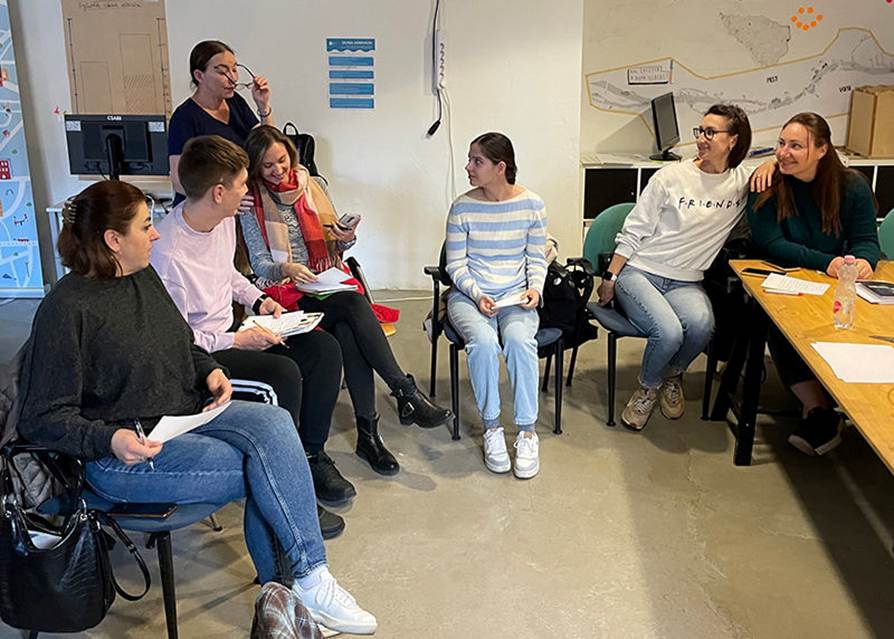
When I first joined the Olive program, I only knew basic English that I had learned at school. Over time, my language skills improved, but I was still afraid to speak, not only because of my limited English but also because I was anxious and lacked confidence.
I used to be very reserved and had a hard time making friends. I rarely talked to anyone unless they spoke to me first, and I struggled to start conversations on my own. Unfortunately, this still happens sometimes, but I’ve made a lot of progress over the years and continue to work on it. The Olive program has played a huge role in my development. I have learned and grown so much, not just in terms of my English skills but also as a person. I’ve become more confident, open, and self-aware.
I also made friends from different countries, and this was one of the best parts of the Olive program. Every time we met, I learned more about them, their culture, and their traditions. Sometimes, they brought cookies or sweets from their own kitchens to share with the group. It was exciting to try their food and hear the stories behind it. These moments were special because I didn’t just taste something new, but I also felt closer to them. Everyone in the group was very kind, open, and helpful. They were always ready to listen and support each other. Even if someone struggled with English, we helped each other communicate, and this made the group feel like a small family.
Some of us also connected on social media, and this made it easier to keep in touch. We started chatting online, sharing updates about our lives, and getting to know each other even better. These conversations helped our friendships grow stronger and more personal. Through these connections, I didn’t just improve my English I also built friendships that taught me a lot about understanding and respecting different cultures. These experiences made the Olive program even more special for me, and I will always be grateful for the people I met.
I clearly remember being in Tom and Ana’s communication class, where there were many of us. I wouldn’t speak unless they asked me, and even then, I would usually give short, one-word answers. But they were always patient, encouraging me to express myself. They could tell when I was nervous or not feeling my best, and they knew how to lift my spirits through their lessons. Looking back, I feel like they watched me grow from a 15-year-old girl who was too scared to speak into someone who has become more confident and open.
I am incredibly grateful to the Olive program for allowing me to be part of it. It has helped me so much over the past few years, and it still does today. I didn’t just learn English I developed my personality and became a better version of myself.
My basketball career
By Ilya Demchenko
My basketball career started when I was 6 years old. At first I went to classes for fun and friends who were there, but after a while my friends left the section and I also thought about it but stayed. After my friends left, I started thinking about improving myself in basketball, after a while I started training in a better place and with a new team but with the same coach. At first I was scared to be in a new environment. But over time I got used to the team and the place. A few years later, by decision of the coach, I was appointed captain of our team.
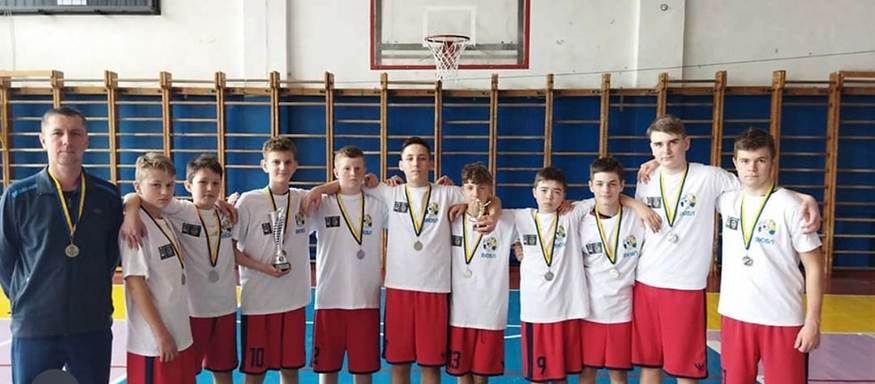
And from that time on, we began to compete and travel all over Ukraine and play. I and my team took second place in the championship of all Ukraine among guys of our age. With each year/month my game became better and better, but after the war, after moving to Budapest, I lost interest in basketball. And that was the end of my career, but it was a truly wonderful time.

A Relationship: A Journey of 10 Years
By Arkadii Tuchinskiy
When I think about my life with Nastya, one phrase comes to my mind: “Love and hard work overcome everything.” We have been together for 10 years, and we have been married for 4 years. During this time, I have realized that love is not only about romance and happiness. Love is also about work every day.
In the beginning, relationships seem easy. We enjoy every moment, spend a lot of time together, and feel happy. But later, challenges appear. These could be small problems or little misunderstandings.
In such moments, I understand that happiness in a relationship does not come by itself.
Love means the ability to listen and understand. Nastya teaches me patience, and I try to be her support. Of course, sometimes it is not easy. Sometimes we argue, and sometimes we make mistakes. But we always know that our love is strong, and all arguments are just small things. I always remember a beautiful poem:
I do not blame my wife,I will never leave her, She became worse with me, But I took her as a good one.
Свою жену не ругаю, Ее никогда я не брошу, Это ведь со мной она стала плохая, А брал-то ее я хорошей
Many people say that good relationships should be “easy.” But I don’t think so. True love happens when two people work together.
10 years is a long time, but I know there is much more ahead of us. Difficult and happy moments made us closer. Every challenge showed us how to love and value each other,
I am proud of our marriage. Love is not only a feeling, but also a choice. And I am happy that 10 years ago, she chose me.
 OLIve Weekend Program Budapest